Choosing the right aluminium windows is one of the most important decisions you will make for your home. Get it right and you will enjoy decades of beauty, comfort and low maintenance. Get it wrong and you will be reminded of it every single day.
The Luxury Aluminium Window Buyer's Guide
Choosing the right aluminium windows is one of the most significant decisions you will make for your home. Get it right and you will enjoy decades of beauty, comfort and low maintenance. Get it wrong and you will be reminded of it every single day — every time you look at a frame that's too thick, a colour that doesn't suit the property, or a handle that feels cheap.
At Behind The Glass, we specialise in the premium end of the aluminium window market. We work with homeowners across Lancashire, Greater Manchester, Cheshire and West Yorkshire who want the best — not the cheapest. This guide is written from that perspective.
Why Aluminium Is the Premium Choice
Before we get into the detail of how to choose, it's worth understanding why aluminium has become the material of choice for discerning homeowners.
Slim sightlines. Aluminium's structural strength allows frames to be made far thinner than uPVC or timber. Premium aluminium profiles can achieve sightlines as narrow as 20mm — creating a window that is almost entirely glass, maximising light and views. uPVC cannot come close to this.
Exceptional durability. Aluminium does not warp, rot, swell, crack or corrode. In the wet Northern English climate, this matters enormously. A quality aluminium window installed today should still be performing perfectly in 35 to 40 years.
Thermal performance. Modern thermally broken aluminium profiles — where a polyamide barrier separates the inner and outer frame — achieve excellent U-values. Combined with A-rated double or triple glazing, today's aluminium windows comfortably exceed Building Regulations requirements.
Aesthetic versatility. Over 200 RAL powder-coat colours, dual-colour options (different inside and outside), and a range of hardware finishes mean aluminium windows can be specified to complement any property — from a contemporary new build to a period Lancashire farmhouse.
Step 1: Understand Your Property Type
The right aluminium window for a sleek modern extension is not the same as the right window for a Victorian terrace or a stone-built Lancashire farmhouse. Before you look at any products, be clear about what your property is and what it needs.
Modern & Contemporary Properties
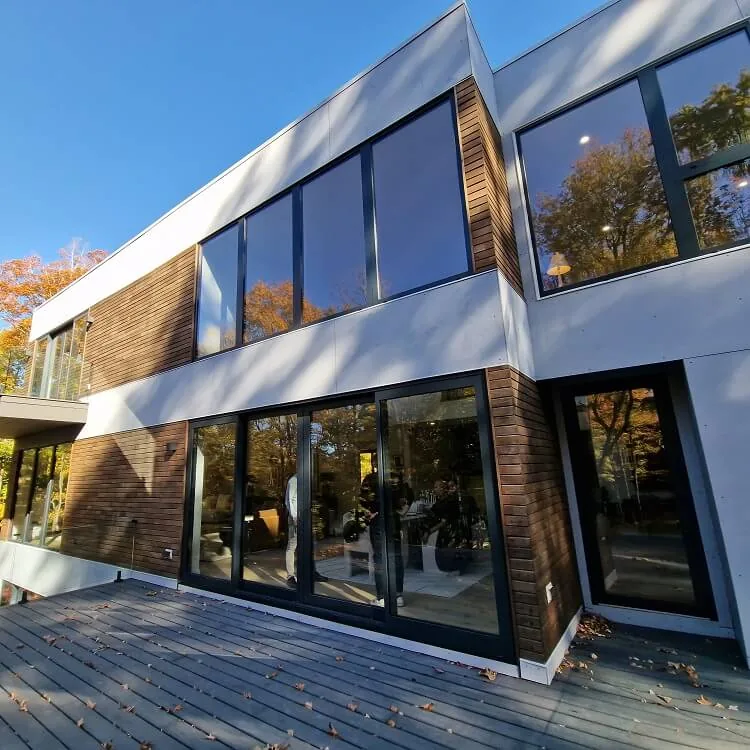
For new builds, extensions and contemporary homes, flush casement or tilt-and-turn aluminium windows in Anthracite Grey (RAL 7016) or Jet Black (RAL 9005) are the natural choice. Ultra-slim sightlines, minimal hardware and clean lines reinforce the architectural aesthetic.
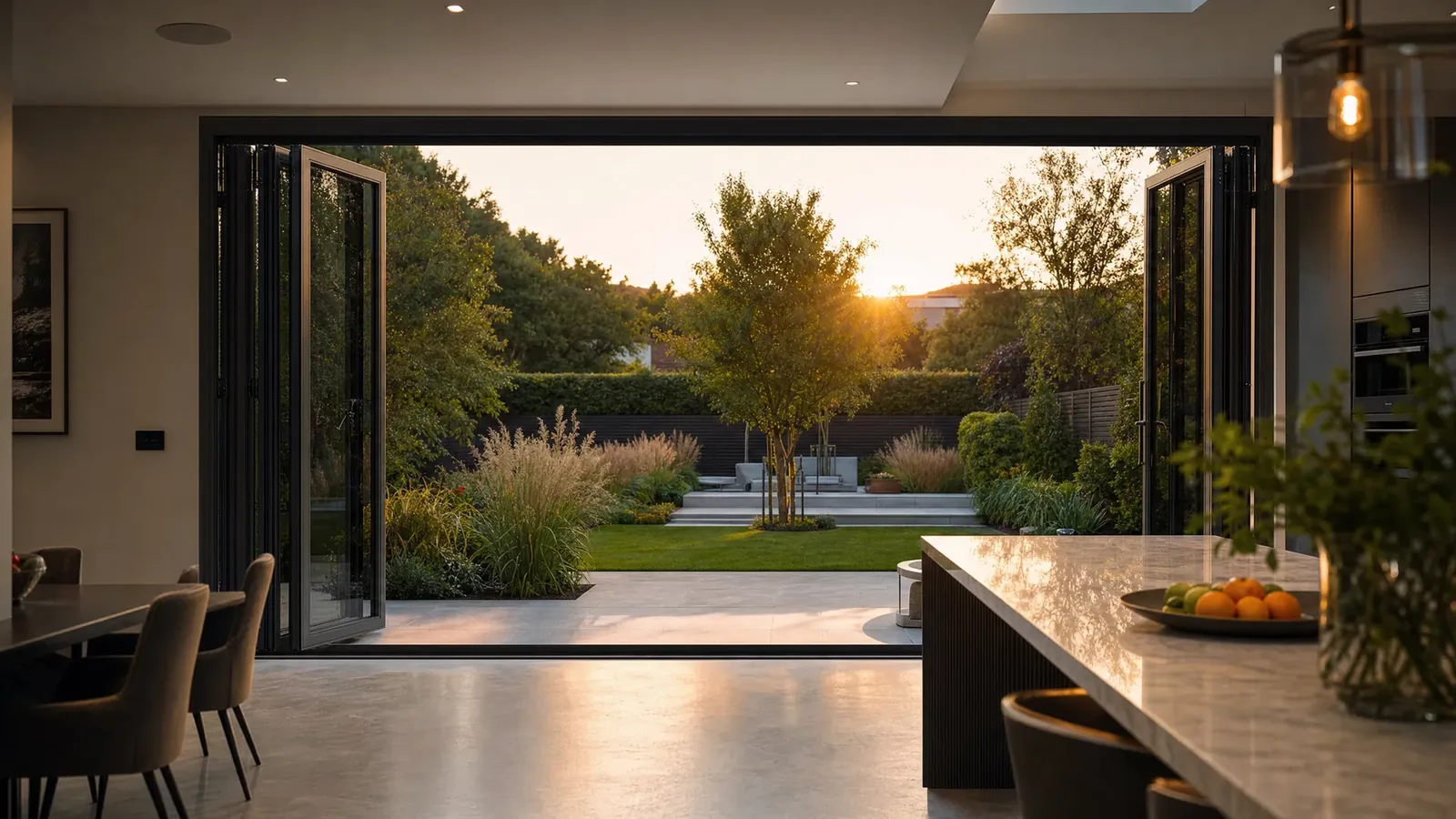
For rear extensions with large openings, consider fixed-light aluminium windows alongside bi-folding or sliding doors — the combination of floor-to-ceiling glass creates a seamless indoor-outdoor connection that defines premium contemporary living.
Period & Heritage Properties
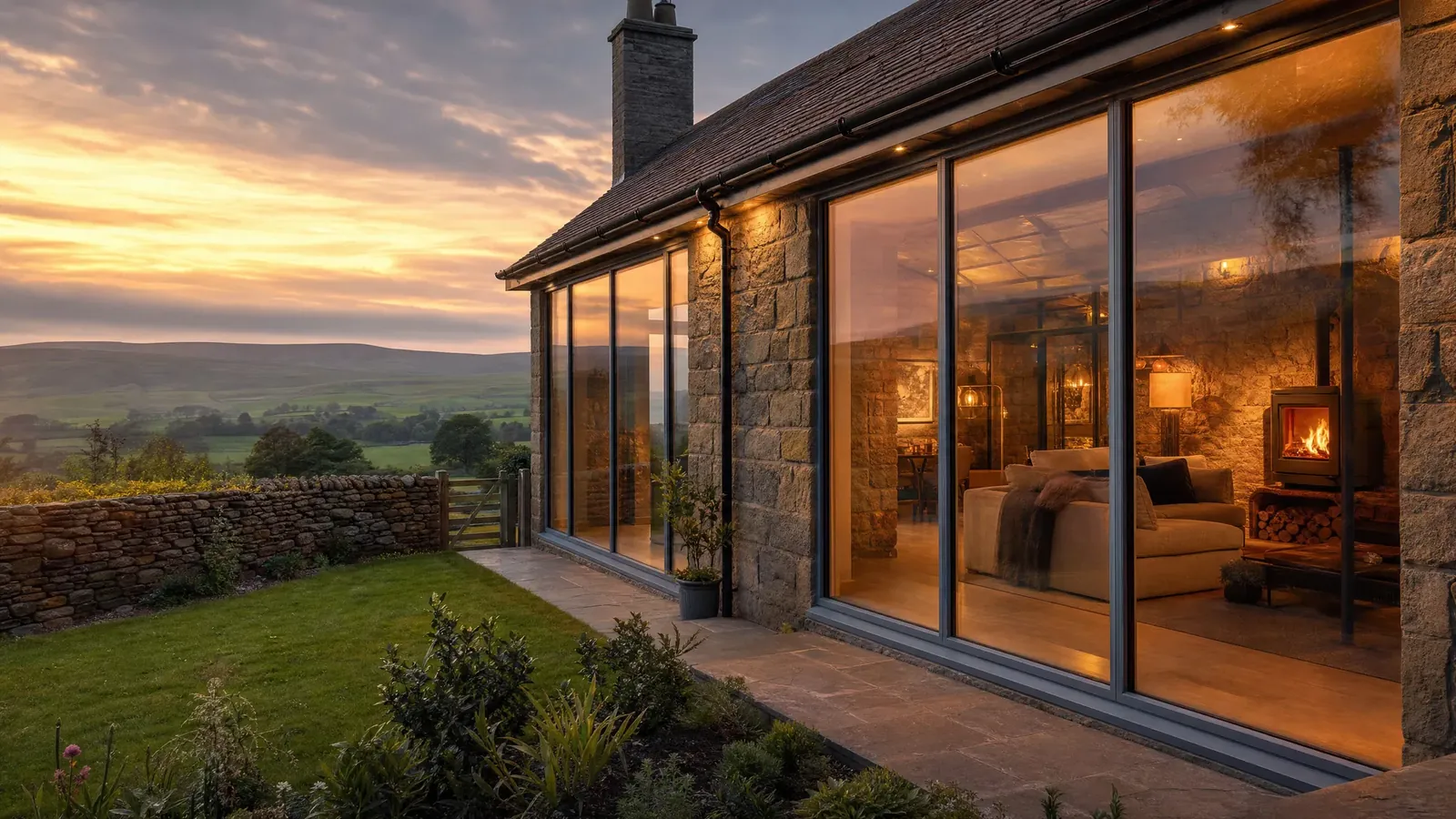
For Victorian, Edwardian and older stone-built properties, the challenge is achieving the slim sightlines and low maintenance of aluminium while respecting the character of the building. Heritage-style aluminium windows — designed to replicate the proportions and detailing of traditional timber sash and casement windows — are the answer.
These systems are available in a wide range of heritage colours (Chartwell Green, Cream, Sage, Slate Blue) and can be specified with traditional glazing bars to replicate the appearance of original windows. The result is a window that looks authentic but performs to modern standards.
Listed Buildings and Conservation Areas
If your property is listed or in a conservation area, you will need to consult your local planning authority before replacing windows. In some cases, aluminium heritage windows can be approved — but this requires careful specification and, in some cases, a planning application. We can advise on this as part of our survey process.
Step 2: Choose the Right Window Style
Aluminium windows are available in a wide range of opening configurations. The right choice depends on the size and position of the opening, ventilation requirements and aesthetic preference.
Casement Windows
The most common style — a frame hinged at the side that opens outward. Available in top-hung (opens at the top), side-hung (opens at the side) and tilt-and-turn configurations. Casement windows are versatile, easy to clean and suit most property types.
Tilt-and-Turn Windows
A European-style window that can tilt inward at the top for ventilation (without the risk of rain ingress) or open fully inward for cleaning. Popular for upper-floor windows and properties where external cleaning is difficult.
Sliding Sash Windows
For period properties, aluminium sliding sash windows replicate the appearance of traditional timber sashes while offering the durability and low maintenance of aluminium. Available with traditional glazing bars and in heritage colours.
Fixed-Light Windows
Non-opening windows that maximise glass area and minimise frame. Used where ventilation is provided elsewhere — for example, alongside opening casements or in combination with mechanical ventilation. Ideal for large picture windows and architectural statements.
Bay and Bow Windows
Aluminium bay and bow window systems allow complex angled configurations that add character and space to a room. Particularly popular for front elevations on period properties.
Step 3: Specify the Right Glazing
The glass in your windows is as important as the frame. For most residential applications, A-rated double glazing is the minimum we would recommend. For north-facing elevations or properties in exposed locations, triple glazing offers additional thermal and acoustic performance.
Key Glazing Specifications
U-value measures thermal performance — the lower the better. Current Building Regulations require a whole-window U-value of 1.4 W/m²K or better. Premium aluminium windows with quality glazing can achieve 0.8–1.0 W/m²K.
Solar control glass is worth considering for south and west-facing windows, particularly large fixed-light panels. It reduces solar heat gain in summer while maintaining good light transmission — preventing the overheating that can make a south-facing room uncomfortable.
Acoustic glass uses a laminated interlayer to reduce noise transmission. Worth specifying for properties near busy roads, flight paths or other noise sources.
Self-cleaning glass has a microscopic coating that breaks down organic dirt in UV light and allows rain to wash it away. Useful for hard-to-reach windows.
Step 4: Choose Your Colour and Finish
Colour choice is one of the most personal — and most permanent — decisions you will make. A powder-coat finish on aluminium is extremely durable and will not need repainting, so it's worth taking time to get this right.
The Most Popular Choices in 2026
Anthracite Grey (RAL 7016) remains the most popular choice for contemporary properties — a sophisticated dark grey that works with almost any brick, render or stone.
Jet Black (RAL 9005) is the bolder, more dramatic alternative — striking on white render or pale stone.
Agate Grey (RAL 7038) is a softer, warmer mid-grey — a good choice for properties where Anthracite feels too dark.
Cream (RAL 9001) and White (RAL 9010) remain popular for period properties and those who prefer a lighter, more traditional look.
Heritage colours — Chartwell Green, Sage Green, Slate Blue, Bronze — are increasingly popular for period properties and those seeking something distinctive.
Dual Colour
One of aluminium's great advantages is the ability to specify different colours for the interior and exterior faces. A popular combination is Anthracite Grey outside with White or Agate Grey inside — giving a bold exterior statement while keeping interiors light and neutral.
Step 5: Choose the Right Hardware
Hardware is where the quality of a premium window installation is most immediately felt. Every time you open a window, you touch the handle. It should feel solid, smooth and well-engineered — not cheap and plasticky.
For premium aluminium windows, we recommend brushed stainless steel or satin chrome hardware as a minimum. For a warmer aesthetic, brushed brass or antique bronze handles are increasingly popular and complement heritage colour schemes beautifully.
Ensure all hardware is specified to match — handles, hinges, restrictors and locking mechanisms should all come from the same family.
Step 6: Choose the Right Installer
The quality of the product matters — but the quality of the installation matters just as much. A premium aluminium window installed poorly will leak, rattle, be difficult to operate and potentially fail structurally. Conversely, a well-installed window will perform perfectly for decades.
What to Look for in a Premium Installer
FENSA registration — all replacement window installations in England and Wales must comply with Building Regulations. A FENSA-registered installer self-certifies compliance, saving you the cost of a separate building control application.
Manufacturer certification — look for installers who are certified by the aluminium system manufacturers they use. This indicates they have been trained on the specific products and meet the manufacturer's quality standards.
References and reviews — ask for references from previous customers and check Google reviews. A premium installer should have a strong, consistent track record. Behind The Glass holds a 5.0 ★ rating across 42 Google reviews.
Own installation team — be wary of companies that subcontract their installations. At Behind The Glass, every installation is carried out by our own experienced team. We don't subcontract.
Comprehensive guarantee — a quality installer should offer a meaningful guarantee on both the product and the installation. Ask specifically what is covered and for how long.
The Behind The Glass Approach
Behind The Glass is a specialist premium glazing company based in Rossendale, Lancashire. We supply and install luxury aluminium windows across Lancashire, Greater Manchester, Cheshire and West Yorkshire.
We work exclusively at the premium end of the market. We don't compete on price with volume installers — we compete on quality, expertise and service. Every project begins with a detailed survey at your property, where we assess the openings, discuss your requirements and advise on the best specification for your home and budget.
We use only premium aluminium systems from trusted manufacturers, and every installation is carried out by our own experienced team to the highest standards.
Ready to discuss aluminium windows for your home? Book a free survey — we'll visit your property, take measurements and provide a detailed, no-obligation quote.
Frequently Asked Questions
Are aluminium windows better than uPVC?
For homeowners seeking a premium result, yes. Aluminium offers significantly slimmer frames, better long-term durability, a wider range of colours and finishes, and a more premium aesthetic. uPVC remains a cost-effective option for budget-conscious projects, but it cannot match aluminium for quality or longevity.
How much do luxury aluminium windows cost?
Premium aluminium windows typically cost between £800 and £2,500 per window supplied and installed, depending on size, style and specification. A full house replacement with premium aluminium windows might cost £12,000–£30,000 depending on the number and size of windows.
Can aluminium windows be fitted to a period property?
Yes — heritage-style aluminium windows are specifically designed for period properties and can replicate the appearance of traditional timber sash and casement windows while offering the performance and low maintenance of aluminium.
What colours are available for aluminium windows?
Over 200 RAL powder-coat colours are available, including dual-colour options (different inside and outside). The most popular choices in 2026 are Anthracite Grey (RAL 7016), Jet Black (RAL 9005), Agate Grey (RAL 7038) and heritage colours including Chartwell Green and Sage.
Do you install aluminium windows in Manchester and Lancashire?
Yes — Behind The Glass installs luxury aluminium windows across Greater Manchester, Lancashire, Cheshire, West Yorkshire and surrounding areas. Contact us to arrange a free survey.
Written by Craig Whitworth, Founder & Lead Installer, Behind The Glass.
Assure Certified Installer
Craig Whitworth is Founder & Lead Installer at Behind The Glass, a premium windows, doors and glazing specialist based in Rossendale, Lancashire.
Last updated: 19 October 2026