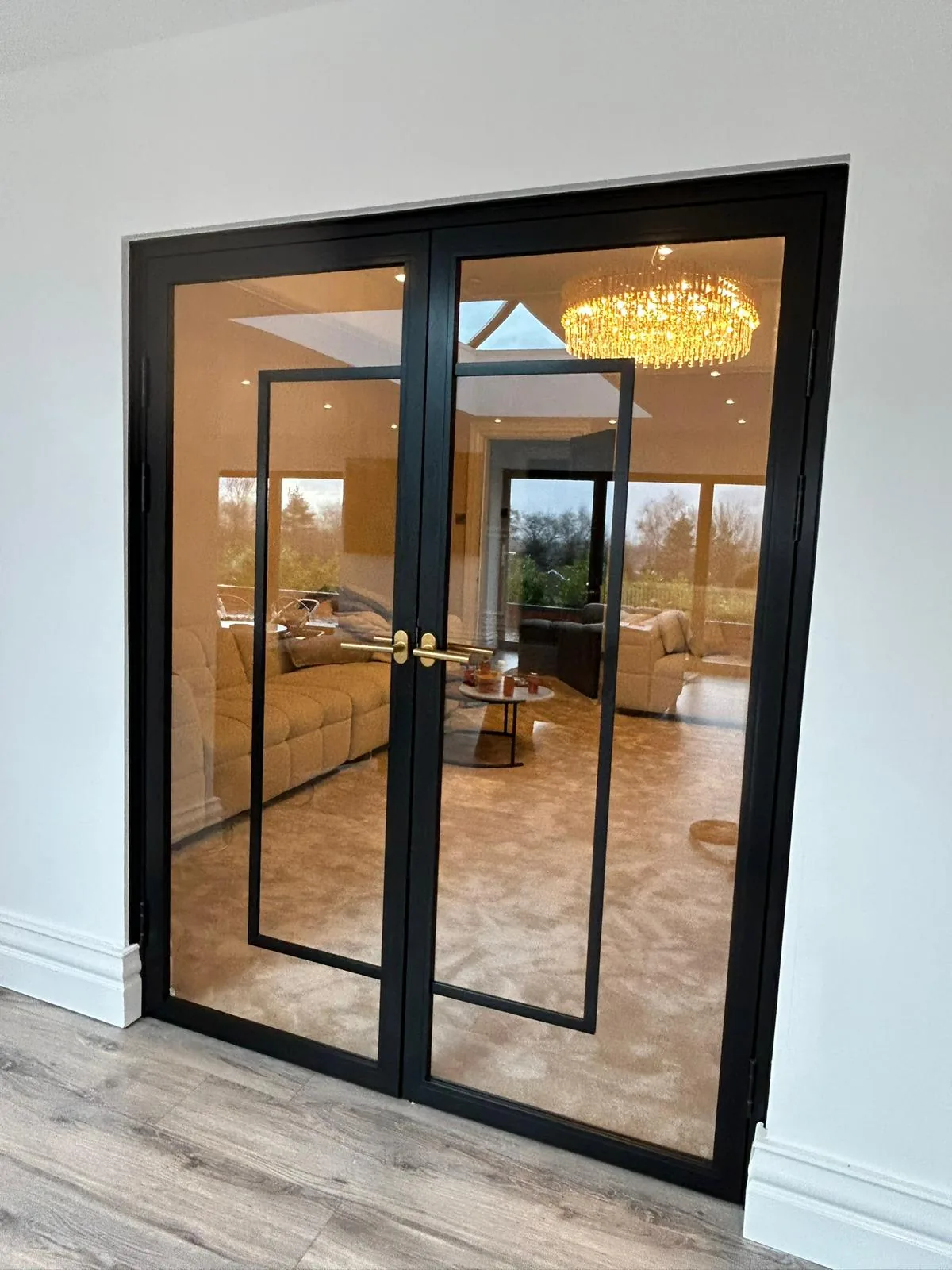
Black-framed, steel-look internal doors have moved from industrial lofts into kitchens, living rooms and hallways across the North West. Done well, they let daylight flow from one room to the next, divide an open-plan space without closing it off, and suit both period homes and modern extensions. Done badly, they rattle, stick or feel flimsy. This guide covers the main options, the choices that make the biggest difference, and the questions to ask before you commit.
What is a "Crittall-style" door?
Crittall is a long-established British manufacturer of steel windows and doors. "Crittall-style" has become the general term for doors with very slim, usually black, frames and a grid of glazing bars, whoever makes them. Today most Crittall-style internal doors are made from either steel or aluminium designed to look like steel. Both give the same signature look. They differ in weight, cost and how they're made.
At Behind The Glass we supply and fit internal heritage doors and other luxury glazed internal doors, along with heritage-style external doors for the outside of the home.
Steel vs aluminium
- ▸Steel has the slimmest possible profiles and an authentic, heavy feel. It's typically the most expensive option and heavier to install.
- ▸Aluminium steel-look systems are lighter, won't rust, are usually less expensive, and can be powder-coated in any RAL colour. For most homes, aluminium gives the look people want at a more accessible price.
Choosing a configuration
Crittall-style internal glazing can be much more than a single door:
- ▸Single door: a straight swap for an existing internal door, often between hallway and lounge or kitchen.
- ▸Double (French) doors: a wider opening between a kitchen and dining room, or into a snug.
- ▸Door with side panels or a fanlight: fixed glazing either side or above, to bring in more light.
- ▸Fixed screen or room divider: a fully glazed wall that zones an open-plan space without blocking light. It can include a door or not.
Think about how you actually use the space. A divider between a kitchen and living area keeps cooking smells and noise contained while keeping the room bright. A glazed door at the bottom of a dark Victorian hallway can transform it.
Glass options
- ▸Clear toughened or laminated safety glass: the standard choice, and a requirement for glazing in doors.
- ▸Reeded or fluted glass: popular for bathrooms and home offices, softening the view while letting light through.
- ▸Obscure or satin glass: for more privacy.
- ▸Bronze or grey tint: for a more dramatic look.
Glazing bar layouts matter too. Fewer, larger panes feel more modern, while a tighter grid looks more traditional and industrial.
Practical points that make the difference
- ▸Measure the opening properly. Older Lancashire properties rarely have perfectly square openings or level floors. Made-to-measure frames, fitted by someone who surveys carefully, avoid gaps and binding.
- ▸Floor finishes. Decide on your flooring first, or at least its finished height, so the door clearance is right.
- ▸Handles and locks. Choose from lever handles, pulls, privacy locks for bathrooms and soft-close options.
- ▸Fire safety. Some internal doors have to be fire doors, for example in loft conversions, three-storey houses and flats. Standard glazed internal doors aren't fire-rated, so check this with us at survey.
- ▸Sound. Glazed doors don't block sound as well as a solid door, though laminated glass helps.
- ▸Finish. Black is the classic choice, but anthracite, bronze and other RAL colours can work beautifully with modern kitchens.
What affects the cost?
Price depends mainly on:
- 1.Configuration and size: a single door costs less than a pair, and a full-height screen with a door is the largest investment
- 2.Material: steel or aluminium
- 3.Number of glazing bars and the glass type
- 4.Finish and hardware
- 5.Installation complexity: making good, plastering, or forming a new opening.
The fastest way to get an accurate figure is a free survey.
Will it suit my home?
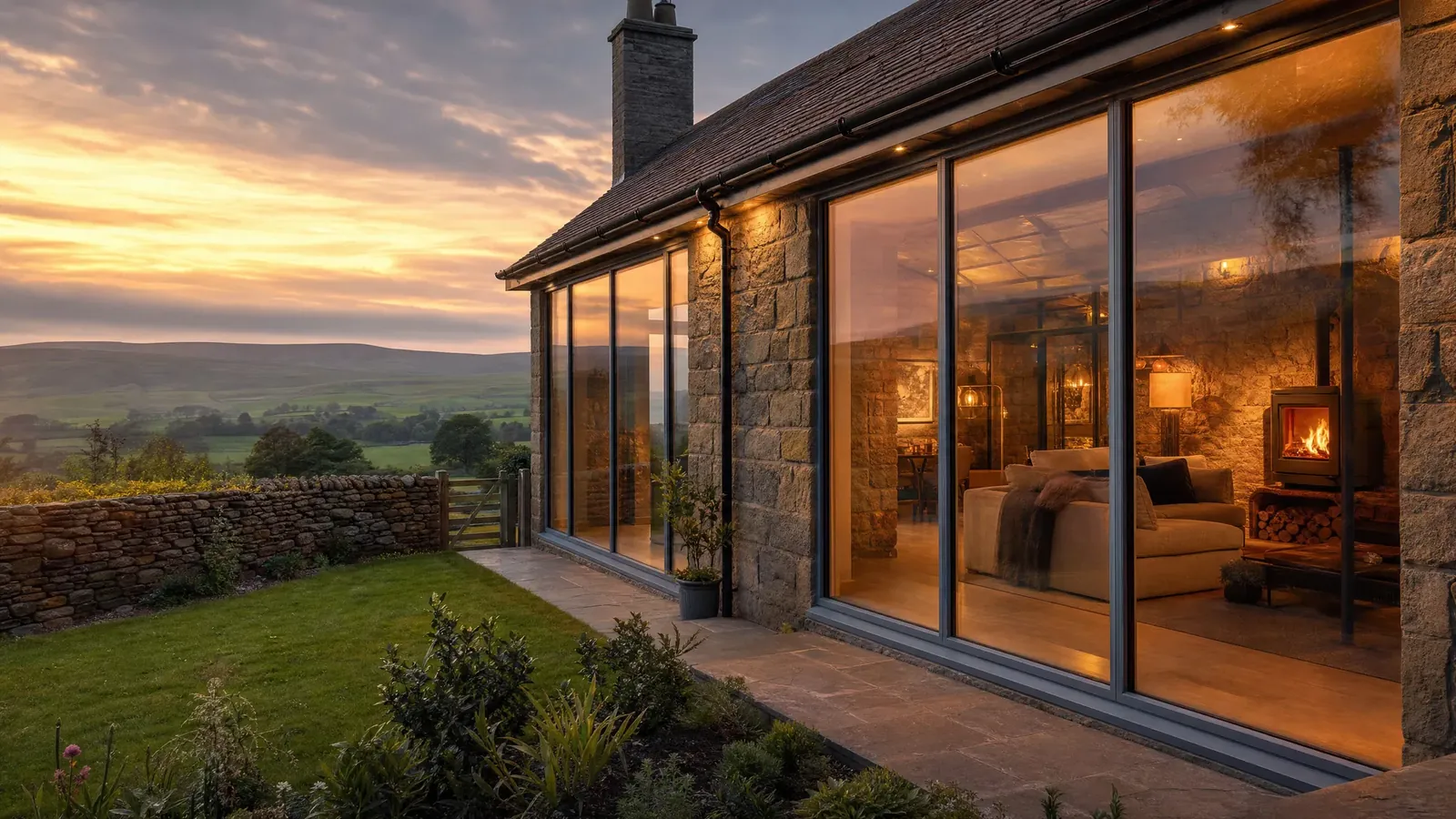
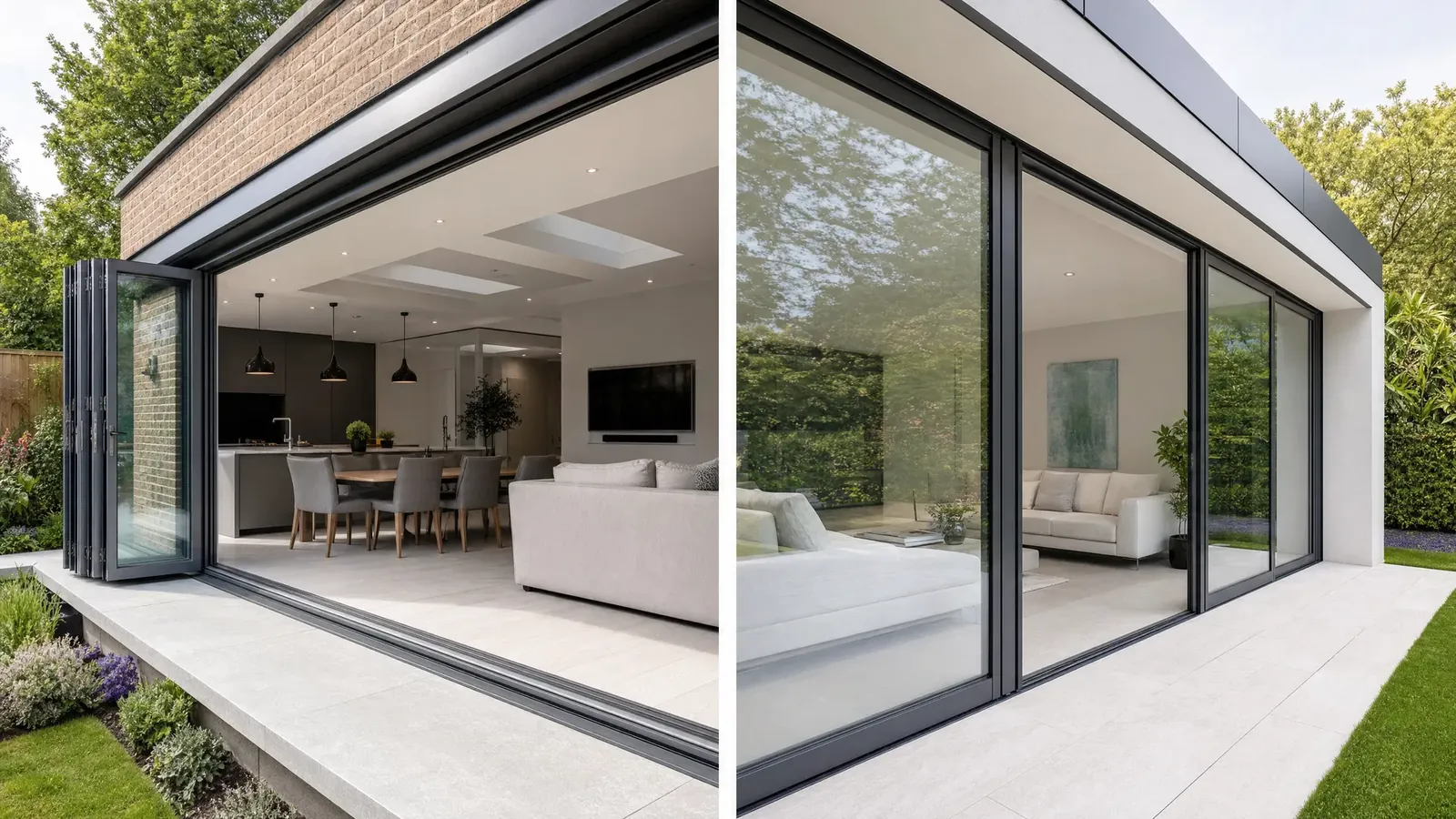
Crittall-style glazing works surprisingly well in Lancashire's stone terraces and Victorian semis, where it echoes the industrial heritage of mill towns like Rawtenstall, Bacup and Burnley. It's equally at home in a contemporary extension with aluminium bi-folding doors or sliding doors, which can be matched in the same colour for a cohesive look.
Frequently asked questions
What's the difference between Crittall and Crittall-style doors?
Crittall is a specific British manufacturer of steel windows and doors. "Crittall-style" describes the slim-framed, gridded look, which other manufacturers now produce in steel or steel-look aluminium.
Are aluminium Crittall-style doors as good as steel?
They give a very similar look and are lighter, rust-free and usually less expensive. Steel has the slimmest profiles and a heavier feel. For most homes, aluminium is the practical choice.
Can Crittall-style internal doors be fire doors?
Standard glazed internal doors aren't fire-rated. If your home needs fire doors, for example off a protected stairway in a loft conversion, you'll need a certified fire-rated product. Ask at your survey.
Can I have privacy glass in a Crittall-style door?
Yes. Reeded, fluted, satin and obscure glass are all popular for bathrooms, utility rooms and home offices.
Do you fit Crittall-style internal doors in Manchester?
Yes. We fit internal heritage doors across Greater Manchester, Lancashire, Cheshire and our home area of Rossendale.
Like the look? Explore our internal heritage doors or book a free design survey.
Written by Craig Whitworth, Founder & Lead Installer, Behind The Glass.
Assure Certified Installer
Craig Whitworth is Founder & Lead Installer at Behind The Glass, a premium windows, doors and glazing specialist based in Rossendale, Lancashire.
Last updated: 19 October 2026